Wholesale vs Big Box Store Cabinets: Which Wins?
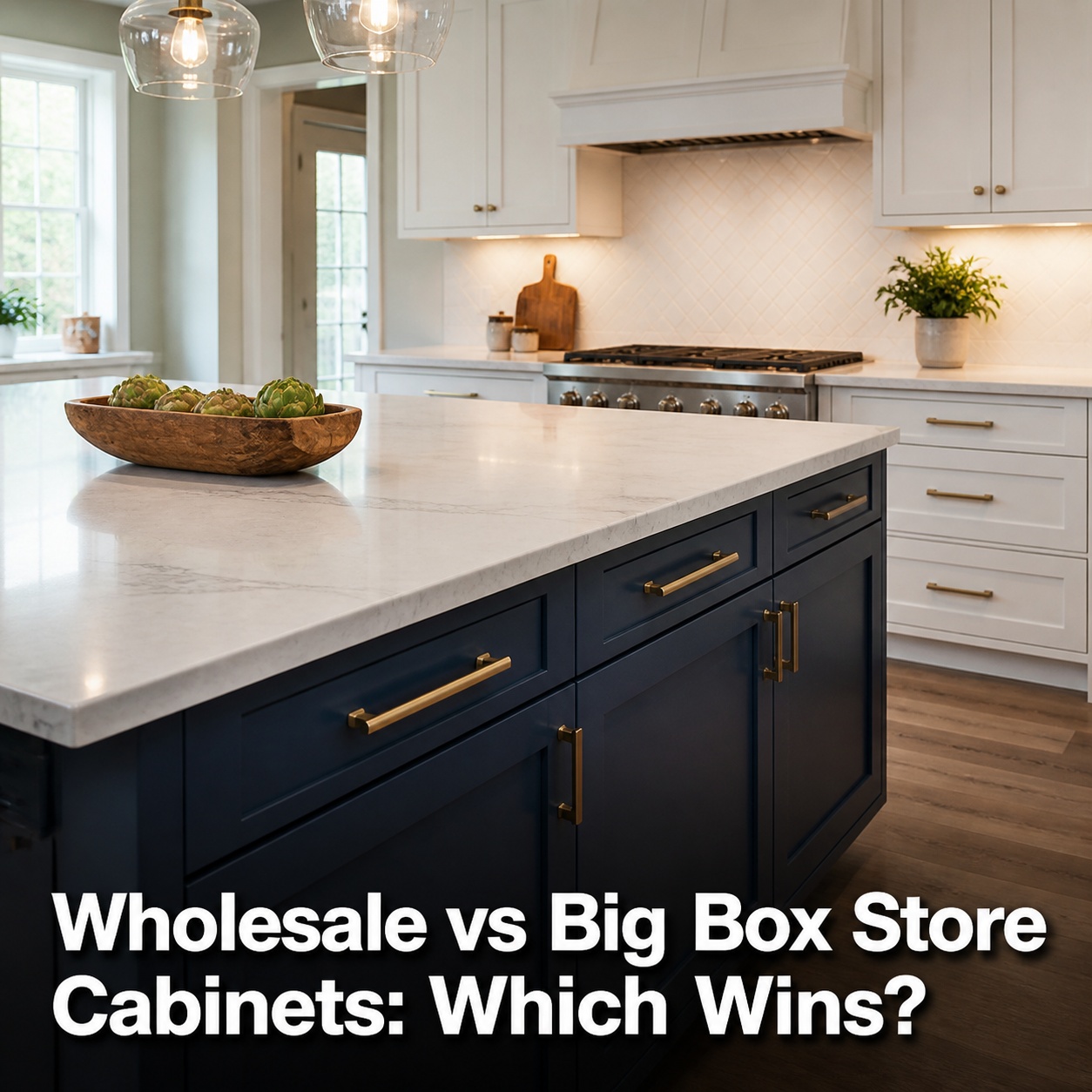
Choosing between wholesale cabinets and big box store cabinets is one of the most consequential decisions you’ll make during a kitchen remodel. The choice affects your budget, your timeline, the quality of materials you live with for decades, and how smoothly the entire project runs. Most homeowners don’t realize just how different these two channels are until they’re already deep into the buying process.
The cabinet market can feel overwhelming, especially when big box stores like Home Depot and Lowe’s make purchasing seem simple and accessible. Wholesale suppliers, on the other hand, often operate behind the scenes, serving contractors and designers who know where to look. Both channels have genuine strengths, and neither is universally superior. The right answer depends on your project type, your budget, your timeline, and how much flexibility you need.
This guide breaks down every major factor side by side so you can make a confident, informed decision. From cabinet quality and materials to pricing, lead times, and long-term value, you’ll find a clear comparison that cuts through the noise and gets straight to what matters.
Overview Of Wholesale Cabinets And Big Box Store Cabinets
What Counts As Wholesale Vs Big Box In The Cabinet Market
Wholesale cabinets are sold through distributors, dealers, or direct-from-manufacturer channels, typically at reduced prices because the retail markup is removed or significantly reduced. These suppliers often carry semi-custom cabinets, RTA cabinets, and stock cabinets across a wide range of styles and finishes. The term “wholesale” doesn’t always mean you need a contractor’s license to buy , many wholesale cabinet dealers sell directly to homeowners.
Big box store cabinets refer to the cabinet lines sold at large home improvement retailers. Home Depot cabinets and Lowe’s cabinets are the most recognizable examples. These stores stock a curated selection of cabinet brands and styles, making them convenient for shoppers who want to see products in person before buying.
| Feature | Wholesale Cabinets | Big Box Store Cabinets |
|---|---|---|
| Price Point | Lower to mid-range | Mid to higher retail |
| Selection | Wide, often customizable | Limited to stocked lines |
| Buyer Type | Contractors, designers, homeowners | Primarily homeowners |
| Construction | Varies widely, often plywood | Often particleboard |
| Lead Time | Varies by supplier | In-stock or short order |
| Support | Dealer or direct support | In-store staff |
How The Supply Chain And Buying Process Differ
Big box stores purchase cabinets from manufacturers in bulk, then resell them with a retail markup. That markup funds the store’s overhead, staff, and marketing. The buying process is straightforward: you visit the store, browse the display, and either take stock items home or place an order.
Wholesale cabinet suppliers cut out or reduce that retail layer. Some are direct importers, others are regional distributors, and some are cabinet dealers who buy in volume and pass savings to buyers. The buying process often involves more steps, including measurements, design consultations, and quote comparisons, but those steps typically result in better pricing and more tailored outcomes.
Understanding this supply chain difference helps explain why cabinet pricing varies so dramatically between channels. It’s not always about quality , it’s often about how many hands the product passes through before reaching you.
Typical Buyers And Project Types For Each Option
Big box store cabinets attract first-time homeowners, DIY enthusiasts, and anyone who values convenience and in-person shopping. These buyers often have smaller kitchens, tighter timelines, or limited experience with cabinet installation.
Wholesale cabinets are the go-to for professional contractors, kitchen designers, and experienced remodelers. They’re also increasingly popular with cost-conscious homeowners who do their research and want more value per dollar. Large kitchen remodel projects, multi-unit builds, and flips almost always use wholesale channels.
The project scale matters enormously here. A single small kitchen refresh might not justify the extra legwork of sourcing wholesale. A full gut renovation with custom layout needs almost always will.
Feature By Feature Comparison
Materials, Construction Quality, And Durability
Cabinet box construction is where the biggest quality differences show up. Wholesale cabinets more frequently use plywood construction for the cabinet box, which is stronger, more moisture-resistant, and holds screws better over time. Many big box store cabinets, particularly at lower price points, use particleboard boxes, which are heavier, less durable, and more susceptible to moisture damage.
If you’re evaluating whether wholesale options are genuinely worth it, this detailed breakdown of wholesale cabinet quality covers the construction differences honestly and in depth. The short answer is that quality varies by supplier, but wholesale channels give you more access to better-built options at comparable or lower prices.
Look for these construction indicators when comparing cabinets:
- Dovetail joints on drawer boxes, which signal stronger craftsmanship
- Plywood versus particleboard cabinet boxes
- Soft close hinges included as standard versus an add-on
- Cabinet hardware quality and finish durability
- Full-extension drawer slides versus partial-extension
Big box store cabinets have improved in recent years, and some lines do offer plywood construction and dovetail joints. But you’ll pay more for those features at retail than you would through a wholesale cabinet dealer.
Design Options, Customization, And Style Variety
Stock cabinets at big box stores come in fixed sizes, a limited range of door styles, and a handful of finishes. That works fine for standard kitchen layouts, but it creates real problems when your kitchen has unusual dimensions or you want a specific aesthetic.
Wholesale suppliers typically offer semi-custom cabinets alongside stock options. Semi-custom means you can adjust dimensions, choose from a broader range of cabinet finishes, and sometimes modify interior configurations. This flexibility is a major advantage for kitchen design projects that need more than a cookie-cutter solution.
Cabinet finishes matter more than most buyers realize. A finish that chips, fades, or peels within a few years turns a budget win into an expensive mistake. Wholesale channels often carry more durable finish options, including thermofoil, painted, and stained wood varieties that hold up better under daily use.
Lead Times, Availability, And Ordering Experience
Cabinet lead time is one area where big box stores have a clear advantage. In-stock items can go home with you the same day. Special orders through big box retailers typically arrive faster than many wholesale orders, though that gap has narrowed as wholesale suppliers have improved their logistics.
Wholesale cabinet lead times vary significantly by supplier. Some RTA cabinets ship within days because they’re assembled by the buyer after delivery. Other semi-custom or custom wholesale orders can take several weeks. Planning your kitchen remodel timeline around cabinet lead time is essential regardless of which channel you use.
The ordering experience also differs. Big box stores offer design software, in-store consultants, and a familiar retail environment. Wholesale cabinet dealers often provide more personalized service, especially for larger orders, but the process requires more initiative from the buyer.
Installation Support, Warranty, And After Sales Service
Cabinet installation support at big box stores usually means paid installation services through third-party contractors the store coordinates. This is convenient but adds cost. The cabinet warranty through big box retailers varies by brand and is often limited in scope.
Wholesale cabinet suppliers typically offer their own cabinet warranty terms, which can be more comprehensive depending on the manufacturer. Some wholesale dealers also have relationships with local installers or provide detailed installation documentation for DIY buyers.
After-sales service is an area where wholesale dealers often outperform big box stores for complex issues. A dedicated cabinet dealer has more incentive to resolve problems quickly because their reputation depends on repeat business and referrals. Big box store service goes through corporate channels, which can slow resolution.
Pricing, Value, And Total Cost Of Ownership
Upfront Cabinet Pricing And Volume Discounts
Cabinet pricing is the most discussed difference between these two channels, and the gap is real. Wholesale cabinets typically cost less per unit than comparable big box store cabinets because the retail markup is reduced or eliminated. The cost per linear foot comparison often shows savings of twenty to forty percent when buying wholesale versus retail.
Volume discounts amplify this advantage. Contractors and designers who buy wholesale regularly negotiate pricing that individual retail buyers simply can’t access. Even homeowners buying wholesale for a single project often receive better pricing than they’d find at a big box store for equivalent cabinet quality.
Big box stores do run sales and promotions, and their financing options can make upfront costs more manageable. But the base pricing structure rarely matches what a wholesale cabinet dealer can offer for the same construction quality.
Hidden Costs, Add Ons, And Long Term Value
Upfront cabinet pricing doesn’t tell the whole story. Big box store cabinets often have add-on costs that aren’t obvious at first glance. Soft close hinges, interior organizers, and specific cabinet hardware may cost extra. Installation services add significantly to the total project cost.
Wholesale cabinets sometimes require more planning effort, but the all-in pricing is often more transparent when you work with an experienced cabinet dealer. Many wholesale suppliers include soft close hinges and quality hardware as standard features rather than upgrades.
Long-term value comes down to durability. A cabinet built with plywood construction and dovetail joints will outlast a particleboard box by many years under normal kitchen use. Paying slightly more upfront for better construction often saves money over the life of the kitchen.
Budget Scenarios For DIY Homeowners Vs Contractors

A DIY homeowner remodeling a mid-sized kitchen has real options in both channels. Big box store cabinets offer convenience and in-person support, which matters when you’re navigating the process alone. Wholesale RTA cabinets offer better value but require more research and self-directed installation.
Consider these budget realities for each scenario:
- DIY homeowner with a small kitchen: Big box stock cabinets may be the most practical choice
- DIY homeowner with a larger kitchen: Wholesale RTA cabinets can save thousands without sacrificing quality
- Contractor doing multiple projects: Wholesale pricing and volume discounts make the math obvious
- Designer working on a high-end remodel: Semi-custom wholesale cabinets offer the customization clients expect
- Flipper or investor: Wholesale stock cabinets balance cost and appearance for resale value
Contractors almost universally prefer wholesale channels because the savings compound across every project. A contractor buying kitchen cabinets for ten kitchens per year at wholesale pricing versus retail pricing saves enough to fund significant business growth.
Best Use Cases And Decision Guidelines
When Wholesale Cabinets Make The Most Sense
Wholesale cabinets are the stronger choice in several clear situations. Large kitchen remodel projects benefit most because the per-unit savings multiply across more cabinets. Projects requiring semi-custom sizing or unusual configurations need the flexibility that wholesale suppliers provide.
Wholesale also wins when cabinet quality is a priority. If you want plywood construction, dovetail joints, and durable cabinet finishes without paying premium retail prices, wholesale channels deliver that combination more reliably. Experienced buyers who are comfortable managing the ordering process independently will find wholesale straightforward.
- Full kitchen gut renovations with custom layouts
- Multi-unit residential or commercial projects
- Buyers prioritizing construction quality over convenience
- Contractors and designers managing client projects
- Homeowners with flexible timelines who can plan ahead
When Big Box Store Cabinets Are The Better Fit
Big box store cabinets genuinely make sense in specific situations. Small kitchen updates where only a few cabinets need replacing benefit from the convenience of in-stock availability. Buyers who need to see and touch cabinets before committing will appreciate the showroom experience.
Time-sensitive projects where cabinet lead time is critical may favor big box in-stock options. If your kitchen is unusable and you need cabinets immediately, waiting weeks for a wholesale order isn’t practical. Big box stores also work well for buyers who want a single point of contact for cabinets, installation, and financing.
Convenience has real value, especially for first-time remodelers who are already managing a steep learning curve. The guided experience at a big box store can reduce mistakes that cost more than any pricing difference.
How To Evaluate Vendors And Compare Quotes
Comparing wholesale cabinet suppliers to big box store options requires looking beyond the sticker price. Request detailed quotes that include all hardware, finishes, and any delivery or installation costs. Ask specifically about cabinet box construction , plywood versus particleboard , and what the cabinet warranty covers.
When evaluating a wholesale cabinet dealer, check their reputation through reviews, ask for references from past projects, and confirm their lead times in writing. A supplier who can’t give you a clear delivery window is a risk to your project timeline.
Use these evaluation criteria when comparing vendors:
- Cabinet box material and construction method
- Included hardware versus add-on pricing
- Warranty terms and claims process
- Lead time guarantees and delivery logistics
- Customer service responsiveness during the quote process
- Cost per linear foot for equivalent quality levels
Getting at least three quotes from different sources, including at least one wholesale cabinet dealer and one big box option, gives you a real baseline for comparison.
Conclusion
The cabinet market rewards buyers who do their homework. Wholesale cabinets offer better pricing, more construction quality options, and greater flexibility for most serious kitchen remodel projects. Big box store cabinets offer convenience, in-person shopping, and faster availability for simpler projects or time-sensitive situations.
Neither channel is universally better. The right choice depends on your project scope, your comfort with the buying process, your timeline, and how much you value construction quality versus convenience. Use the comparison framework in this guide to evaluate your specific situation honestly, and you’ll make a decision you’re confident in long after the cabinets are installed.
FAQ
Are Wholesale Cabinets Always Better Quality Than Big Box Store Cabinets
Not always, but they frequently are at comparable price points. Wholesale channels give buyers access to plywood construction, dovetail joints, and better cabinet hardware at prices that undercut retail. Big box store cabinets have improved, and some lines offer solid construction, but you typically pay more for equivalent quality. The key is comparing specific construction specs rather than assuming either channel is automatically superior.
Can Homeowners Buy Directly From Wholesale Cabinet Suppliers
Yes, many wholesale cabinet suppliers and dealers sell directly to homeowners. The term “wholesale” doesn’t always require a contractor’s license or business account. Some suppliers do require minimum order quantities or prefer working with trade buyers, but a growing number actively market to DIY homeowners and offer the same pricing advantages. Research local and online wholesale cabinet dealers to find those that welcome direct consumer purchases.
How Do I Decide Between Wholesale And Big Box Cabinets For A Kitchen Remodel
Start by defining your priorities. If budget and construction quality are your top concerns and you have time to plan, wholesale cabinets almost always win. If convenience, speed, and in-person support matter more, big box store cabinets are a reasonable choice. Get quotes from both channels for your specific kitchen layout, compare the total cost including hardware and installation, and evaluate the cabinet warranty terms. That side-by-side comparison will make the right answer clear for your situation.