How to Choose Kitchen Cabinets the Right Way
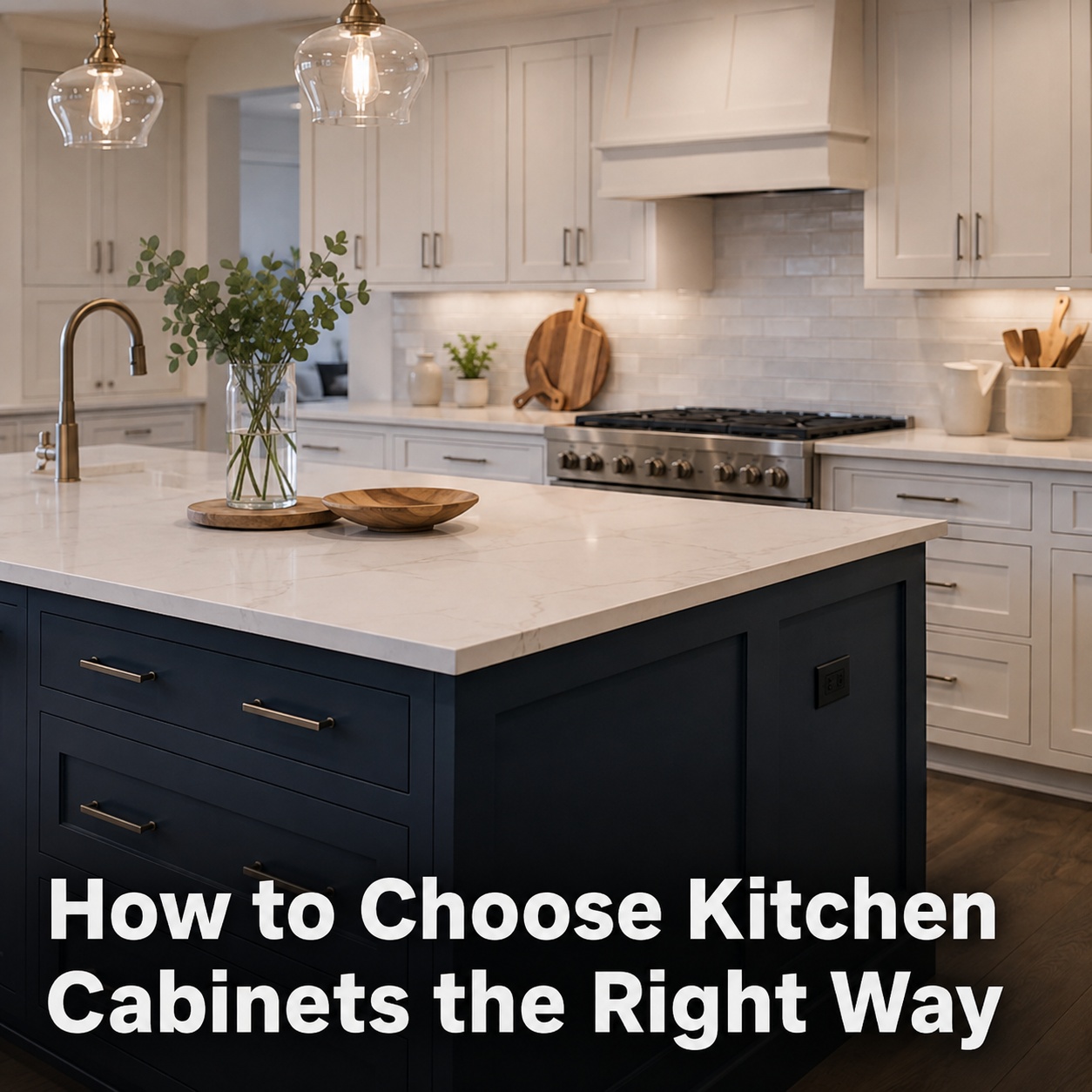
Choosing kitchen cabinets is one of the most significant decisions you’ll make during a kitchen remodel. Cabinets set the tone for the entire space, influence how functional your kitchen feels every day, and represent a major portion of your overall budget. Getting this decision right means thinking carefully before you ever step into a showroom or click “add to cart.”
Most homeowners underestimate how many variables are involved. Cabinet style, cabinet material, wood type, cabinet color, storage space, and cabinet hardware all need to work together. Miss one piece of the puzzle, and you could end up with a kitchen that looks off, feels cramped, or costs far more than expected.
This guide walks you through every stage of the process , from measuring your kitchen and setting a realistic cabinet budget to comparing brands, finishes, and installation options. By the end, you’ll have a clear, confident plan for choosing kitchen cabinets that fit your home, your lifestyle, and your wallet.
Understanding Your Kitchen Cabinet Needs
Assessing Your Space, Layout, and Storage Requirements
Before you think about cabinet door styles or finishes, start with your kitchen layout. How much wall space do you have? Where are the windows, doors, and appliances? These factors directly determine what cabinet types will fit and how much storage space you can realistically gain.
Walk through your current kitchen and note what frustrates you. Not enough drawer space? Awkward corner cabinets? Shelves too deep to reach? Your existing pain points are the best guide to what your new cabinets need to solve.
Think about how you actually use your kitchen , cooking frequency, number of people, types of appliances, and how much you entertain. This shapes everything from cabinet depth to the number of specialty units you’ll need.
Setting a Realistic Budget and Priorities
Cabinet budget is where most kitchen remodel projects go sideways. It’s easy to fall in love with custom cabinets and then realize the cost is three times what you planned. Set your number before you start shopping, not after.
A useful approach is to divide your budget into tiers: cabinets themselves, hardware, installation, and a contingency buffer. Most professionals recommend keeping at least ten percent of your total budget as a reserve for surprises.
Prioritize what matters most to you. If you cook daily, invest in durable materials and smart storage solutions. If aesthetics drive your decision, allocate more toward cabinet finish and hardware quality.
Choosing Between Stock, Semi-Custom, and Custom Cabinets
Stock cabinets come in fixed sizes and are the most affordable option. They’re widely available and can work well in standard kitchen layouts. Semi-custom cabinets offer more size flexibility and finish options at a mid-range price point. Custom cabinets are built to your exact specifications and carry the highest cost.
| Cabinet Type | Cost Level | Lead Time | Best For |
|---|---|---|---|
| Stock Cabinets | Low | Immediate | Standard layouts, tight budgets |
| Semi-Custom Cabinets | Mid | 2 to 6 weeks | More flexibility, moderate budgets |
| Custom Cabinets | High | 8 to 16 weeks | Unique layouts, premium finishes |
Your kitchen layout and budget will usually make this decision for you. If you’re unsure which direction to go, reading about cabinets that deliver the best value for your investment can help you narrow down your options before committing.
Key Design Decisions: Style, Materials, and Colors
Popular Cabinet Door Styles and How to Match Your Home
Cabinet style should complement the overall design of your home, not fight against it. Shaker style cabinets are the most versatile and widely used , their clean lines work in traditional, transitional, and modern kitchens alike. Raised panel doors feel more formal and suit classic or colonial-style homes. Flat-panel or slab doors lean contemporary and minimalist.
The cabinet door is the most visible element of your cabinetry, so choose a profile that you’ll still love years from now. Trendy styles can date quickly, while timeless profiles hold their appeal.
Look at your home’s existing trim, flooring, and architectural details. Your cabinet style should feel like a natural extension of those elements, not a jarring contrast.
Comparing Cabinet Materials, Finishes, and Durability
Cabinet material determines how long your cabinets last and how they hold up to daily use. Solid wood is the premium choice , it’s durable, can be refinished, and looks beautiful. Plywood is the most recommended material for cabinet boxes because it resists moisture and holds screws well. MDF (Medium Density Fiberboard) is smooth and takes paint evenly, making it popular for painted cabinet doors.
Cabinet finish affects both appearance and durability. Painted finishes offer a clean, modern look but can chip over time. Stained finishes showcase the natural wood grain and are easier to touch up. Thermofoil and laminate finishes are budget-friendly but harder to repair if damaged.
Understanding how cabinet grades are defined and what separates quality levels will help you make smarter comparisons when you’re evaluating different brands and price points.
Selecting Colors and Hardware That Work Together
Cabinet color sets the mood of your entire kitchen. White and off-white remain the most popular choices because they brighten spaces and pair easily with most kitchen countertops. Navy, forest green, and charcoal have become strong alternatives for homeowners who want more personality. Two-tone kitchens , using one color for upper cabinets and another for base cabinets , add visual depth without overwhelming the space.
Cabinet hardware is the jewelry of your kitchen. Pulls, knobs, and cabinet hinges should coordinate with your faucet, lighting fixtures, and appliance finishes. Brushed nickel, matte black, and brass are all strong choices depending on your overall palette.
Don’t underestimate how much hardware changes the feel of a cabinet , the same door can look completely different with a simple knob versus a long bar pull.
Functional Features and Interior Organization
Planning Cabinet Types: Base, Wall, Tall, and Specialty Units
A well-planned kitchen uses a mix of cabinet types to maximize every inch. Base cabinets sit on the floor and support your countertops. Wall cabinets mount above and provide upper storage space. Tall cabinets, like pantry units, run floor to ceiling and offer significant storage in a compact footprint. Specialty units include corner solutions, appliance garages, and open shelving sections.
- Base cabinets: standard depth is 24 inches, height is 34.5 inches before countertop
- Wall cabinets: typically 12 inches deep, available in various heights
- Tall cabinets: ideal for pantry storage or housing built-in ovens
- Specialty units: lazy Susans, blind corner pull-outs, appliance lifts
Map out your kitchen layout on paper or use a free online tool before ordering. Knowing exactly which cabinet types go where prevents costly mistakes.
Smart Storage Solutions: Drawers, Pull-Outs, and Organizers
Modern kitchen cabinets offer far more than fixed shelves. Soft close drawers have become a standard expectation , they prevent slamming and extend the life of the cabinet. Pull-out shelves inside base cabinets make deep storage accessible without digging. Drawer organizers, spice pull-outs, and trash can units all add function without adding square footage.
- Soft close drawers and hinges for quieter, longer-lasting operation
- Pull-out trash and recycling units built into base cabinets
- Deep drawer stacks for pots, pans, and bulky items
- Vertical dividers for baking sheets and cutting boards
Think about what you store and how often you access it. Frequently used items should be at eye level or in easy-reach drawers. Rarely used items can go in upper cabinets or deep corner units.
Ergonomics and Accessibility for Everyday Use
Good cabinet design reduces physical strain. Wall cabinets mounted too high force you to reach and strain your shoulders. Base cabinets without pull-outs make you crouch and dig. Ergonomic cabinet placement means your most-used items are between hip and shoulder height.
If anyone in your household has mobility limitations, consider lower wall cabinets, pull-down shelf systems, and full-extension drawer slides. These features make the kitchen safer and more comfortable for everyone.
Step-by-Step Process for Choosing and Buying Cabinets
Measuring Your Kitchen and Creating a Simple Layout
Accurate cabinet measurement is non-negotiable. Measure every wall from corner to corner, note the location of windows and doors, and record ceiling height. Measure twice , errors in measurement lead to gaps, misaligned cabinets, and expensive corrections.
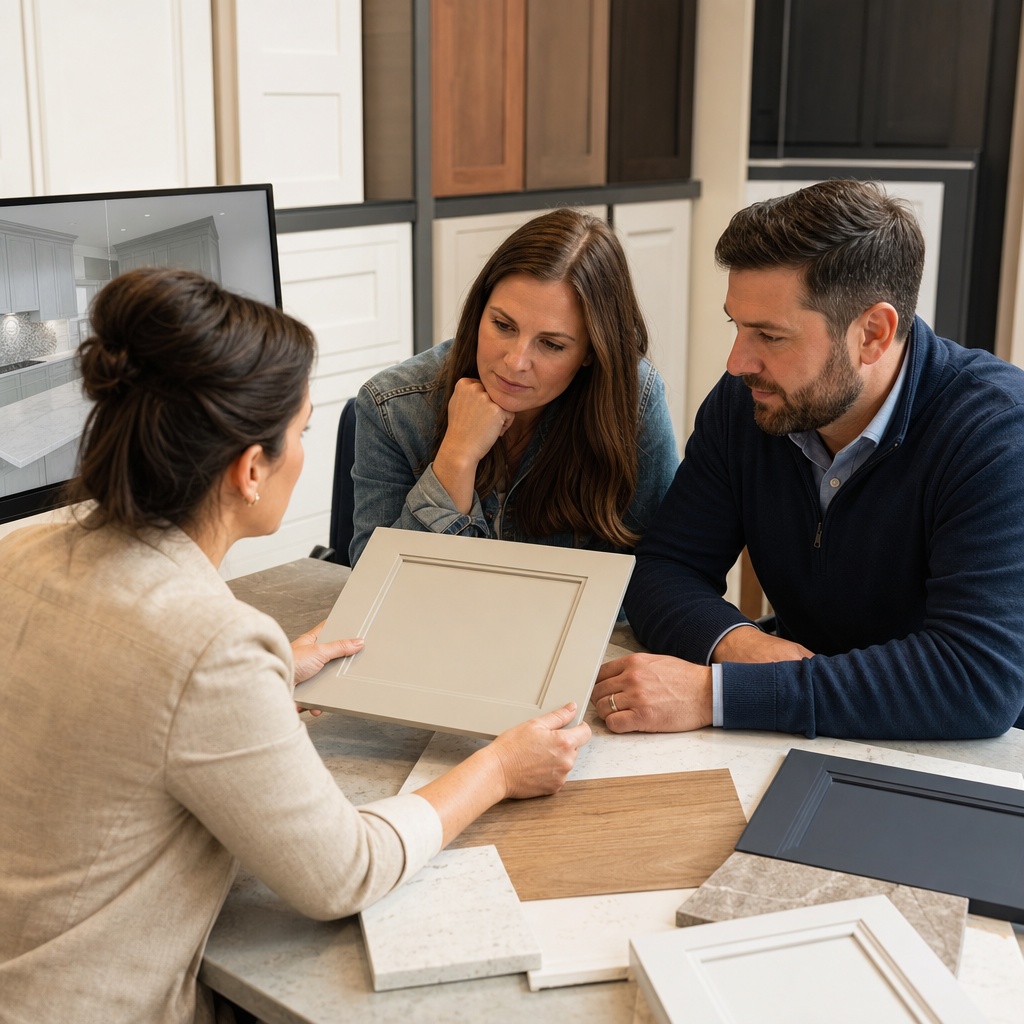
Sketch your kitchen layout to scale on graph paper. Mark where appliances, plumbing, and electrical outlets are located. This drawing becomes your planning tool for every cabinet decision that follows.
Comparing Brands, Quality Levels, and Construction Details
Not all kitchen cabinets are built the same. Look at how the cabinet box is constructed , plywood boxes outperform particleboard in moisture resistance and screw-holding strength. Check drawer slides: undermount, full-extension slides are the gold standard. Examine door hinges for smooth operation and adjustability.
When comparing brands, look beyond price. A cheaper cabinet that warps or falls apart within a few years costs more in the long run. Comparing options like ready-to-assemble versus pre-assembled cabinets can also reveal significant differences in both cost and convenience depending on your situation.
Working With Designers, Showrooms, and Installers
A kitchen designer can save you from costly layout mistakes. Many cabinet showrooms offer free design consultations when you’re purchasing through them. Bring your measurements, photos of your current kitchen, and a clear sense of your style preferences.
Cabinet installation quality matters as much as cabinet quality. Even excellent cabinets look poor if installed unevenly. Get at least two or three quotes from licensed installers and ask to see examples of their previous work.
Reviewing Quotes, Warranties, and Finalizing Your Order
Before signing anything, review every line item in your quote. Confirm that cabinet hardware, installation, and any specialty units are included or clearly excluded. Ask about lead times so your project timeline stays on track.
Warranty terms vary widely between manufacturers. Look for at least a limited lifetime warranty on the cabinet box and a multi-year warranty on hardware. A strong warranty signals that the manufacturer stands behind their product’s durability.
Troubleshooting Common Cabinet Selection Problems
What to Do If Your Choices Exceed Your Budget
If your selections are over budget, start by revisiting cabinet type. Switching from custom to semi-custom, or from semi-custom to stock cabinets, can save thousands without sacrificing quality. You can also reduce the number of specialty units or choose simpler cabinet door profiles.
Another option worth exploring is whether your existing cabinet boxes are in good condition. If they are, refacing your current cabinets instead of replacing them entirely can dramatically cut costs while still delivering a fresh, updated look.
Fixing Mismatched Styles, Colors, or Finishes
Mismatched cabinets usually happen when decisions are made in isolation. Choosing a cabinet color without considering your kitchen countertops, flooring, or backsplash is a common mistake. Always evaluate your selections together, not separately.
If you’ve already ordered and realize something feels off, cabinet hardware can sometimes bridge a style gap. Swapping out pulls and knobs is inexpensive and can unify a look that feels disconnected.
Dealing With Limited Space, Odd Corners, and Obstructions
Small kitchens and awkward layouts require creative solutions. Blind corner cabinets with pull-out organizers reclaim otherwise wasted space. Tall pantry cabinets maximize vertical storage when floor space is limited. Open shelving in tight spots can feel less visually heavy than full upper cabinets.
Obstructions like pipes, beams, or uneven walls may require filler strips or custom modifications. Plan for these early , discovering them mid-installation causes delays and added costs.
Conclusion
Choosing kitchen cabinets well requires patience, planning, and a clear understanding of your priorities. Start with your space and budget, work through style and material decisions carefully, and don’t skip the functional details that make a kitchen genuinely enjoyable to use. The process takes time, but the result , a kitchen that works beautifully and looks exactly right , is absolutely worth the effort.
FAQ
How do I know if I should choose stock, semi-custom, or custom cabinets?
Start with your kitchen layout and budget. Stock cabinets work well in standard-sized kitchens where off-the-shelf dimensions fit without major gaps. Semi-custom cabinets suit kitchens that need slightly different sizing or more finish options. Custom cabinets make sense for unusual layouts, high-end finishes, or when nothing else fits your specific needs.
What cabinet features give the best value for a small kitchen?
In a small kitchen, prioritize storage efficiency over aesthetics. Soft close drawers, pull-out shelves, and tall pantry cabinets give you the most usable space per square foot. Avoid bulky specialty units that eat up room without adding proportional storage. Simple shaker style doors in a light cabinet color will also make the space feel larger and more open.
How can I be sure the cabinets I choose are good quality?
Look at the box construction first , plywood is more durable than particleboard. Check that drawer slides are full-extension and undermount. Test the cabinet hinges for smooth, adjustable operation. Ask about the cabinet finish process and whether it’s applied by hand or machine. Reading independent reviews and understanding cabinet grades before you buy will give you a much clearer picture of what you’re actually getting for your money.