Paint or Replace Kitchen Cabinets: Which Is Worth It?
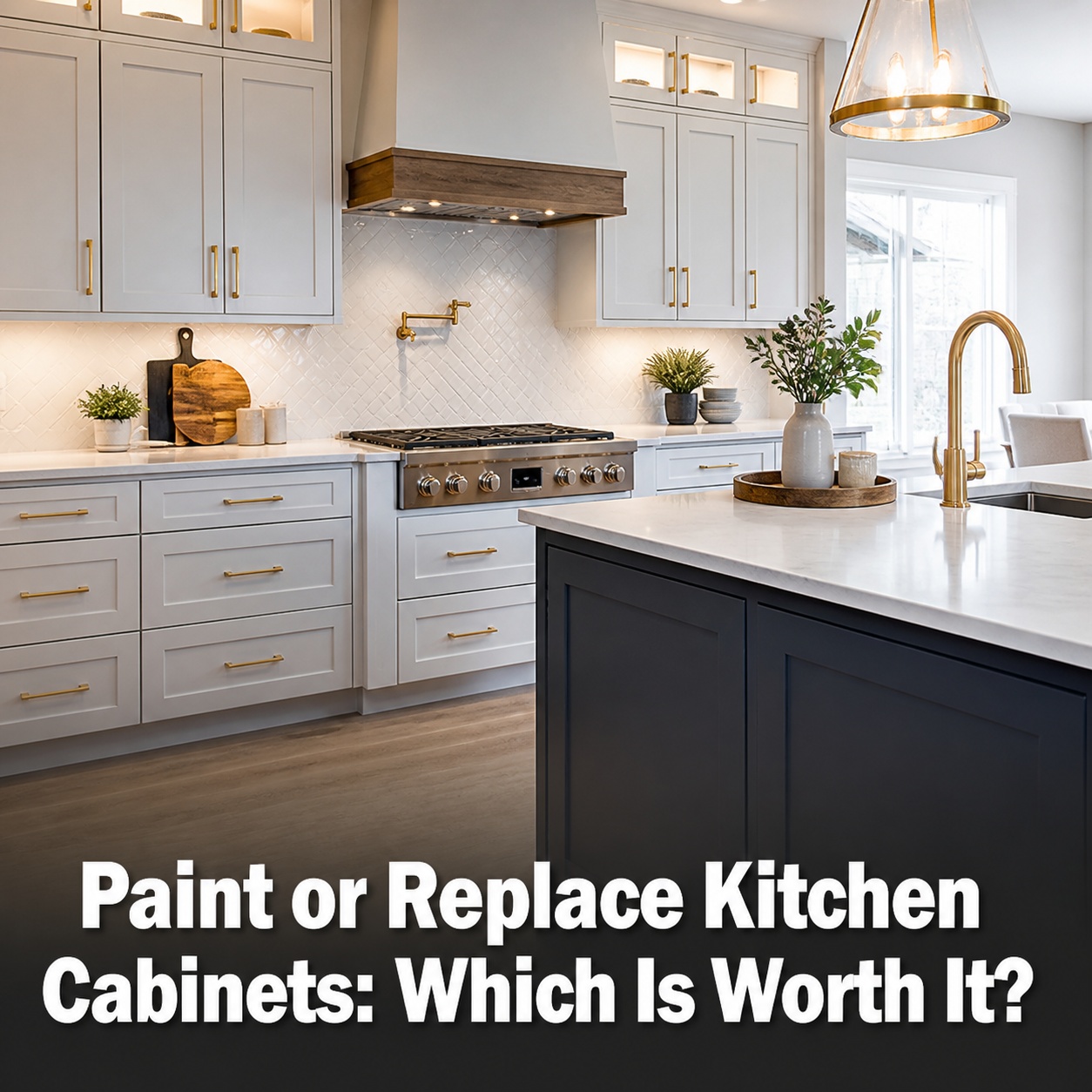
Your kitchen cabinets take up more visual real estate than almost anything else in the room. They set the tone for the entire space, and when they start looking tired, dated, or worn, the whole kitchen feels that way too. The question most homeowners face is straightforward but not simple: do you paint what you have, or do you tear it all out and start fresh?
Both options have genuine merit, and neither is universally the right answer. The best choice depends on the condition of your existing cabinets, your budget, your goals for the space, and how long you plan to stay in the home. This guide walks through both paths honestly so you can make a decision that actually makes sense for your situation.
Understanding Your Existing Kitchen Cabinets
Before you spend a dollar on paint or new cabinet boxes, you need to know exactly what you’re working with. A thorough assessment of your current cabinets will tell you more than any cost calculator ever could.
Assessing Cabinet Structure, Layout, and Functionality
Start with the bones. Open every door, pull out every drawer, and check how everything moves and fits. Solid, well-functioning cabinet boxes with good kitchen layout are strong candidates for painting rather than replacement.
If your kitchen layout works for how you cook and live, that’s a significant point in favor of painting. Changing the layout means replacing cabinets entirely, which is a much larger project.
| Cabinet Feature | Paint-Friendly | Replace Instead |
|---|---|---|
| Cabinet boxes | Solid, no warping | Soft, swollen, or rotted |
| Cabinet doors | Flat or simple profile | Heavily ornate or damaged |
| Kitchen layout | Works well as-is | Needs reconfiguration |
| Cabinet hardware | Replaceable easily | Non-standard sizing |
| Drawer function | Smooth operation | Broken slides or frames |
Evaluating Surface Condition, Material, and Finish
The material your cabinets are made from matters enormously. Wood cabinets and MDF surfaces accept paint well when properly prepared. Thermofoil and laminate surfaces are trickier and often peel after painting.
Understanding your cabinet grades before making any decision can save you from costly mistakes. If you’re unsure what your cabinets are made of or how they were constructed, reviewing a resource on cabinet quality and construction grades can help you evaluate whether your existing units are worth the investment of a fresh coat of paint.
Check the existing finish carefully. Glossy surfaces need sanding and primer before paint will adhere properly. Peeling veneer or bubbling laminate is a red flag that painting alone won’t fix.
Identifying Common Problems: Wear, Damage, and Outdated Style
Surface scratches, minor dings, and faded finishes are all paintable problems. Structural damage, water intrusion, and cabinet condition issues like soft wood or mold are not.
Outdated cabinet styles are often a cosmetic issue that paint and new cabinet hardware can address effectively. A flat-front door in a dated oak finish can look completely transformed with the right paint color and updated pulls.
- Surface scratches and scuffs: paintable
- Faded or yellowed finish: paintable
- Minor dents or dings: paintable with filler
- Water damage or swelling: replacement needed
- Structural instability: replacement needed
- Mold or pest damage: replacement needed
Pros and Cons of Painting Kitchen Cabinets
Cabinet painting is one of the most popular DIY projects for a reason. It delivers a dramatic visual change at a fraction of the cost of full replacement. But it’s not without its limitations.
Cost, Time, and Skill Level Required for Painting
Painting kitchen cabinets yourself typically costs between a few hundred dollars in materials. Hiring a professional painter brings that number up significantly, but the results are usually far superior to a rushed DIY project.
The time investment is real. Proper cabinet painting involves removing all cabinet doors, cleaning every surface, sanding, applying primer, painting multiple coats, and reinstalling everything. Budget at least a full weekend for a small kitchen, and longer for larger spaces.
- DIY material costs: lower upfront investment
- Professional painter fees: higher but better finish quality
- Time required: several days minimum
- Skill level: moderate to high for best results
Design Flexibility, Color Choices, and Trend Considerations
One of the biggest advantages of cabinet painting is the sheer range of paint colors available. You can go bold with navy or forest green, stay classic with white or cream, or try something unexpected. Chalk paint has become a popular option for homeowners who want a matte, vintage-inspired finish without heavy prep work.
Kitchen design trends shift, and paint lets you shift with them affordably. If you tire of a color in a few years, repainting is far less disruptive than full cabinet replacement.
Keep in mind that very trendy paint colors can date a kitchen just as quickly as they refresh it. Neutral tones tend to have longer staying power and broader appeal if resale is a consideration.
Durability, Maintenance, and When Painting Is a Good Long-Term Option
Painted cabinets can last many years with proper care, but they do require maintenance. High-traffic areas around handles and edges are prone to chipping and wear over time.
Using a high-quality primer and cabinet-specific paint dramatically improves durability. Oil-based and waterborne alkyd paints tend to hold up better than standard latex in kitchen environments.
Painting is a strong long-term option when your cabinet boxes are structurally sound, your kitchen layout works well, and your primary goal is a fresh look without a full kitchen remodel.
Pros and Cons of Replacing Kitchen Cabinets
Full cabinet replacement is a bigger investment, but it also opens up possibilities that painting simply cannot deliver. New cabinets mean new storage configurations, new materials, and a completely fresh start.
When Replacement Makes Sense: Structural Issues and Layout Changes
If your cabinet boxes are warped, water-damaged, or structurally compromised, painting over the problem only delays the inevitable. Replacement is the only real solution in those cases.
Layout changes are another clear trigger for replacement. If you want to add an island, extend upper cabinets to the ceiling, or reconfigure your kitchen entirely, you’ll need new cabinets regardless of their current condition.
Cabinet refacing sits between painting and full replacement as a middle-ground option worth understanding. If you’re weighing all three paths, exploring the differences between cabinet refacing and full replacement can help clarify which level of intervention your kitchen actually needs.
Budget, Material Options, and Impact on Home Value
Cabinet replacement is a significant budget consideration. Costs vary widely depending on whether you choose stock, semi-custom cabinets, or fully custom units. Material choices range from solid wood to plywood boxes with wood veneer doors, each with different price points and performance characteristics.
The return on investment for a kitchen remodel that includes new cabinets is generally strong, particularly if the existing cabinets were visibly outdated or damaged. New kitchen cabinets can meaningfully improve home value, especially in competitive real estate markets.
- Stock cabinets: most affordable, limited sizes
- Semi-custom cabinets: more flexibility, mid-range cost
- Custom cabinets: highest cost, fully tailored
- RTA (ready-to-assemble): budget-friendly with good quality options
Disruption, Timeline, and Working with Contractors or DIY Installation
Full cabinet replacement is disruptive. Your kitchen will be out of commission for days or weeks depending on the scope of work. Countertops, kitchen countertops backsplash, and plumbing may all need to be addressed as part of the project.
Working with a contractor adds labor costs but ensures proper installation, especially for complex layouts. A DIY project is possible with the right skills, particularly with ready-to-assemble cabinet options that are designed for homeowner installation.
Budget considerations should include not just the cabinets themselves but also installation, hardware, and any associated work like countertop replacement or electrical updates.
How to Decide: Paint vs. Replace for Your Kitchen
The decision comes down to a clear-eyed look at your specific situation. There’s no universal right answer, but there are reliable frameworks for thinking it through.
Key Decision Factors: Budget, Goals, and How Long You’ll Stay
If you’re planning to sell soon and your cabinets are structurally sound, painting is almost always the smarter financial move. It delivers strong visual impact at a low cost, which is exactly what you need for a quick kitchen refresh before listing.
If you’re staying long-term and your cabinets are damaged or your layout no longer works, replacement is worth the investment. You’ll enjoy the benefits for years, and the return on investment in terms of daily functionality and home value is real.
- Selling soon with sound cabinets: paint
- Staying long-term with damaged cabinets: replace
- Tight budget, cosmetic issues only: paint
- Layout problems or structural damage: replace
Comparing Environmental Impact and Sustainability of Each Choice
Painting existing cabinets is the more sustainable choice by a wide margin. You’re keeping existing materials out of landfills and avoiding the energy and resources required to manufacture new cabinets.
Replacement generates significant waste, particularly if old cabinets are not donated or recycled. If sustainability matters to you, painting or cabinet refacing is the greener path.
That said, if replacement is necessary, choosing cabinets made from sustainably sourced wood or recycled materials can reduce the environmental footprint of the project.
Real-World Scenarios: Which Option Fits Different Types of Homeowners
For the budget-conscious homeowner with functional cabinets and a desire for a fresh kitchen design, painting is the clear winner. It’s affordable, flexible, and delivers real results when done properly.
For the homeowner planning a full kitchen renovation with layout changes, new kitchen countertops, and updated appliances, replacement makes sense as part of a larger project. If you’re investing in everything else, outdated cabinet boxes will undermine the whole effort. Knowing where to source quality cabinets at the right price point matters here, and understanding the difference between the best cabinets for your money can help you stretch your renovation budget further.
For the homeowner somewhere in the middle, cabinet refacing offers a third path worth serious consideration.
Conclusion
Painting and replacing kitchen cabinets both have a legitimate place in the world of kitchen renovation. The right choice isn’t about which option sounds better in theory. It’s about what your cabinets actually need, what your budget realistically allows, and what your goals are for the space.
Painting wins on cost, speed, and sustainability when your cabinet boxes are solid and your layout works. Replacement wins when structural problems, layout changes, or long-term investment goals make a fresh start the smarter move.
Take the time to assess your cabinets honestly before committing to either path. A decision made with clear information will always serve you better than one made on impulse or trend alone.
FAQ
Is it cheaper to paint kitchen cabinets or replace them?
Painting is significantly cheaper than replacement in almost every scenario. Even hiring a professional painter costs a fraction of what new cabinets, installation, and associated work will run. If your cabinet condition allows for painting, it’s the more budget-friendly path by a wide margin.
How long does painted cabinetry typically last compared to new cabinets?
Professionally painted cabinets with proper prep and quality materials can last many years before needing touch-ups or repainting. New cabinets, depending on the material and construction quality, can last decades. The gap in longevity is real, but so is the gap in cost. For many homeowners, repainting every several years is still more economical than a full replacement.
What signs indicate that cabinets are too damaged to paint and should be replaced?
- Visible water damage, swelling, or soft wood in the cabinet boxes
- Mold growth inside or behind cabinets
- Structural instability, including doors that won’t hang properly
- Pest damage that has compromised the wood
- Peeling or bubbling laminate that cannot be re-adhered
- Cabinet layout that no longer meets your functional needs
If you’re seeing any of these issues, paint is not a solution. Replacement is the only path that addresses the underlying problems rather than covering them up.